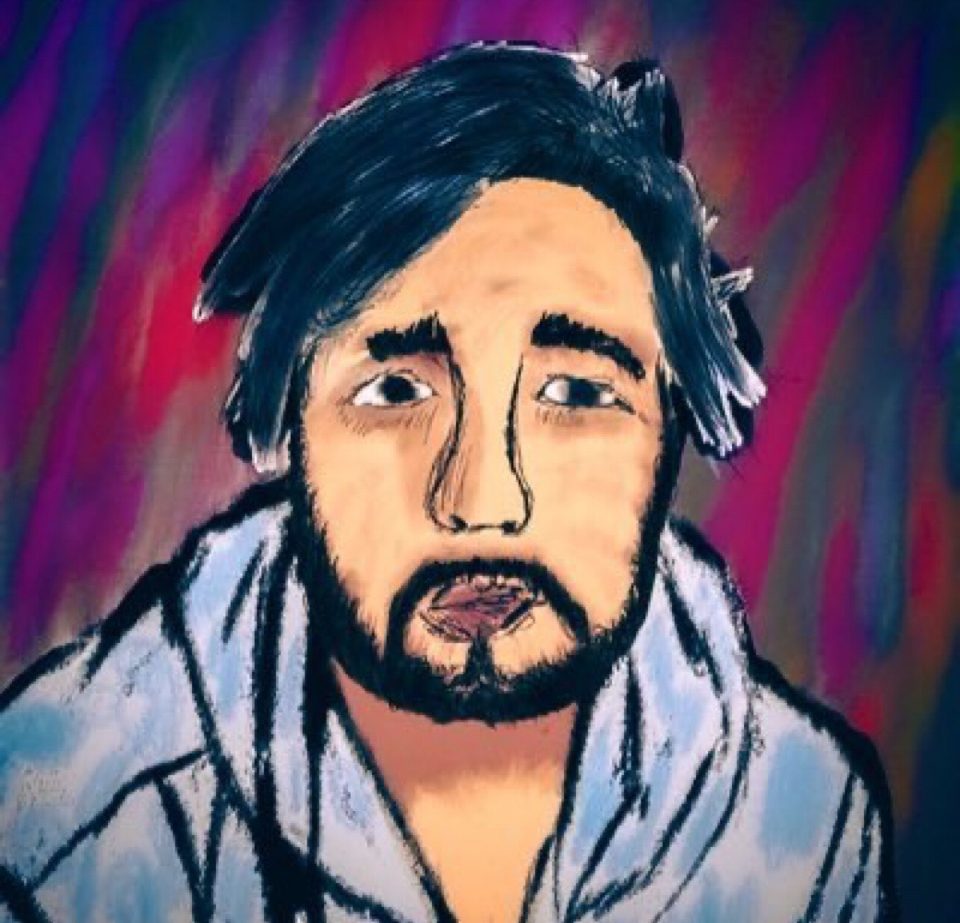
In the first days, when the sky wept ash and the mountains groaned beneath the weight of sorrow, Yzotl rose from the womb of shadow. His hands were forged of iron, his heart hardened into stone, and no warmth of love nor spark of pity dwelt within him. Where he walked, silence followed, for even the winds feared to stir at his passing. His eyes, dark as the void between stars, sought dominion not through song nor gift, but through ruin and submission.
It was then that he set his gaze upon the Mother, Sil, who had borne all flesh. From her breast flowed the rivers of life, and from her breath came the spark that awakened beasts and men. Her voice had been the first song, her embrace the shelter of the world, and in her womb was carried the harmony of all things. Yet to Yzotl, she was not mother but sovereign, and sovereignty was a crown he could not abide upon another’s brow.
With wrathful hands, Yzotl struck Sil. The blow tore heaven’s veil, and her cry shook the firmament until the stars themselves turned their faces away. From her wound spilled a river upon the Throne, and its waters were red as grief eternal. That river carried not life but torment, staining the soil with bitterness and choking the roots of every living thing. Where once her footsteps had planted gardens, now grew thorns and shadow.
Her death silenced the first song. The earth itself bent low in mourning, and the heavens grew hollow, stripped of their brightness. The children of Sil scattered like ashes upon the wind, hiding their faces in dust and lamentation. And so it was that the age of nurture was sundered, and the dominion of chains was born. Yzotl placed upon his head the crown of the Torturer, heavy with sorrow and dread, a crown none could lift without trembling. His reign was not carved from love, nor covenant, but from the rattle of shackles and the breaking of flesh.
Thus began the reign of the Torturer, and thus ended the womb that had known compassion
Though Yzotl had torn the Mother from the throne of creation, still a hunger gnawed at him. He sought beauty, yet knew not its shape; he yearned for life, yet could not cradle it without breaking it. His hands, made to rend and bind, were clumsy with gentleness, and thus his gifts became mockeries of the wonders Sil had once sown. From his desire for song came cries of anguish; from his longing for order came shackles and scourges. All that he touched bore the mark of his cruelty, and where his shadow fell, joy withered as grass in drought.
The creatures he shaped were bent and piteous things. Their limbs twisted, their eyes dull, their flesh marked by suffering before their first breath. They crawled and stumbled across the earth, crying out for mercy, but found only the lash of their father’s wrath. His anger fell upon them as the sun upon a withered leaf, burning them until their bones cracked and their voices fell silent. Yet even their silence did not ease his heart, for in their frailty he saw the reflection of his own failure, and this he despised above all.
The heavens themselves recoiled from his works. The sky groaned beneath the weight of his abominations, and the firmament cracked as though unwilling to bear witness. The stars turned away their faces, withholding their light, and so his dominion was cast into shadows deeper than night. Even the seas withdrew their favor, boiling and recoiling from the shores. In their depths the fish rotted, their flesh sloughing into the black abyss, until only their white bones drifted like pale ghosts upon the current. Thus all creation shrank from him, for none could endure his hand.
But Yzotl was not stilled. From dust and ash he raised armies, breathing into them no joy, no spirit, but only command. Blind were they, faceless and hollow, yet they marched to the beat of drums broken and horns cracked, for discord was their only music. In their steps echoed the emptiness of their maker, and their voices lifted not in song but in shrieks of misery. Each was shackled to Yzotl’s curse, bound to serve without rest, without hope, without end. They were the legions of torment, and their march was the heartbeat of his reign.
Yet still Yzotl, though his hands were steeped in ruin, sought to build a fairer world. In his heart lingered the shadow of longing, though all his craft was twisted by the weight of his curse. What he desired he could not fashion whole, for beauty withered in his grasp, and harmony fractured when bent to his will. Yet he labored still, as one who claws at stone, desperate to carve meaning from the void.
Thus a palace rose at his command, wrought not of living stone but of bone and ash and flame. Its walls groaned like the timbers of a shipwreck, and in its vast halls the echoes wept like children left alone in the dark. Every chamber was filled with sorrow’s breath, and the torches that burned within gave no warmth, but instead cast a light that revealed only grief. The ceilings dripped with the memories of the slain, and the very air carried the stench of endings. It was a palace fit for no king, yet Yzotl claimed it, for none else would dare.
At the heart of this citadel stood his throne. Forged from rivers of blood that had hardened into stone, it towered higher than the mountains and cast a shadow that reached the borders of every realm. No land, no sea, no sky lay beyond its shade, and under that darkness, the children of Sil trembled and despaired. The throne was heavy with sorrow, for it bore not only his dominion but also the weight of all he had broken.
Those who named him spoke in whispers, daring not to utter his name twice. For in Yzotl was the Terror, crowned with grief. His was a reign unchallenged, not for want of foes, but for the paralysis of fear. His crown was woven of suffering, his scepter carved of anguish, and none could lift their gaze to meet his own.
And there upon his throne he sat in silence, drinking deeply of the cries of his dominion. To others they were screams, yet to him they were symphony: the broken wails of the dying, the lament of the forsaken, the endless sobs of a world unhealed. “This,” he whispered to himself, “is music worthy of a crown.”
Still Yzotl labored, as though the throne alone could not satisfy his hunger. He sought to fashion wonders as the Mother had once done, for in him burned a desire to rival her artistry, to prove himself not only destroyer but creator. Yet all that issued from his hand bore the mark of his torment, and what he touched was marred beyond redemption. For he could not craft without cruelty, nor shape without sorrow; his hand was a hammer, and the world, an anvil.
He carved the birds with wings, but wings that could not fly. They fluttered weakly, rising only to fall, their bodies trembling with every failed ascent. Their songs were hollow, echoes without melody, dissolving into dust before they touched the ear. No joy lingered in their voices, only the memory of what song might have been, and the silence that followed was heavier than the cries of the suffering.
He gave the beasts a hunger without end, a gnawing emptiness that no feast could sate. They prowled the wastelands, their eyes glazed with famine, rending one another without pause. Flesh became their covenant, blood their inheritance, and their teeth were sharpened upon the bones of their kin. They knew no rest, no tenderness, only the ceaseless gnawing that Yzotl had breathed into their bellies.
He forged the trees with roots that drank not of water but of ash. Their trunks rose black and twisted, and their branches bore fruit as hard as stone, bitter to the tongue and barren of seed. Beneath their shade, no creature lingered, for their leaves dripped poison and their bark cracked with the cries of a thousand unseen mouths. Forests once living became groves of despair, where even shadows feared to dwell.
He shaped the skies with storms that never broke. The heavens churned with black clouds, rolling without end, and lightning split the firmament in vain. The thunder roared not in triumph but in mourning, lamenting for what could not be. No dawn pierced those veils, no stars shone through, and the world lay in eternal tempest, beaten by rain that tasted of salt and sorrow.
Thus all things he touched were wounded by his longing. Beauty fled before his iron hand, leaving only parodies behind — hollow creatures, endless hungers, poisoned forests, and mourning skies. And still he labored, never seeing that in his striving for glory he wrought only grief, and that every work was but another echo of the Mother’s death.
Then came the first of voices, rising from the dust like smoke, whispers woven with dread. They proclaimed Yzotl not merely as conqueror, but as lord of grief and flame. His dominion was no longer spoken of as passing shadow but as truth eternal, carved into the marrow of creation itself. Where his name fell upon the air, the ground shuddered, and those who heard it trembled, for to speak it was to taste sorrow, and to repeat it was to risk madness.
His name was carved in marrow and in stone, etched into the bones of the slain and upon the cliffs of the earth. His mark seared itself into the trembling land, carved into the very veins of rivers and the hollows of mountains. Even the dust carried his curse, for every footprint bore the memory of chains. The world itself wore his brand, and none could lift their eyes without beholding some trace of his dominion.
The children of the flesh, who once had sung the Mother’s songs, now hid their faces in terror. They feared the gaze of Yzotl, for his eyes consumed hope as fire consumes chaff, leaving only despair. Villages shuttered their windows, and cities cloaked themselves in silence, lest the echo of joy draw his notice. To laugh was peril, to sing was ruin, to dream was to invite his wrath. And so the earth was stripped of all voices but his.
In the shadows of his throne arose the priests of silence. They bent their knees not out of devotion but of terror, binding themselves in sackcloth and ash. Day and night they chanted hymns of sorrow to their master, hymns that praised not life, but its undoing. They spoke of chains as covenant, of grief as gift, of torment as truth. And their voices spread like contagion, until even those who despised him repeated his name with trembling lips, for fear that silence would condemn them swifter still.
And none could flee, for all the gates were sealed. The heavens had withdrawn, the seas recoiled, and the earth lay bound. His shadow stretched without end, wrapping the world in night unbroken. There was no dawn beneath his reign, only the endless twilight of sorrow, a darkness so deep that even memory of light began to fade. Thus the dominion of Yzotl was sealed — not by chains of iron, but by chains of despair.
Yet in the deep where blood had spilled and hardened into a river, the Mother was not wholly gone. Her body was broken, her song silenced, yet her heart still murmured in the secret places of the ground. Beneath the Throne of Blood, beneath the ash that veiled the earth, her pulse throbbed faintly, like the last embers of a fire long thought extinguished. Yzotl had struck her down, yet he could not unmake the root of her being, for she was woven into the fabric of creation itself.
Her breath became the wind that stirred the ashes, carrying whispers across the desolate plains. When it moved through the ruins, it sang in voices soft but unyielding, like the lullabies once sung to children cradled in her arms. Her tears became the salt upon the sea, bitter yet enduring, flowing through the waters that had once rejoiced in her touch. And where waves lapped upon forsaken shores, they bore her memory still, a lament none could silence.
Though slain, she lingered in the hidden places. In caverns deep, where Yzotl’s shadow had not fully reached, her spirit whispered against the Throne. It was not a cry of defiance, nor a thunderclap of war, but a murmur — gentle, persistent, unyielding. Against the clash of chains and the roar of torment, it seemed fragile, yet it endured, for no crown of grief could smother it.
And those who dared to listen found within it a sorrow that was not despair, but mourning mingled with love. They wept when they heard it, yet in their weeping they discovered strength. For within that sorrow was a seed — small, trembling, but alive — the seed of hope. And they held it within their hearts, hiding it as one hides a flame in the wind, shielding it against the suffocating night.
Thus even in the reign of the Torturer, a whisper rose against him, faint as a breath, fragile as a tear — yet destined to endure beyond the shadow of his throne.
But Yzotl knew. Upon his throne of blood, he felt the stirring beneath the earth, the breath upon the ashes, the salt upon the sea. He heard the murmur of the Mother echoing against the weight of his dominion, and it pierced him like a thorn in flesh. Though her body lay slain and her voice was but a whisper, it defied the silence he had carved across the world. In fury, he thundered, his cry shaking the heavens: “No voice shall rise against the iron crown. No memory shall outlast my reign. I am lord of grief, and I will be the end of all songs.”
He sent forth his legions, the blind armies of dust and ash, to scour the remnants of her voice. Into the valleys they marched, setting flame to the meadows where her memory lingered in the wind. Into the mountains they climbed, drowning rivers and crushing springs beneath cascades of stone. They stretched their hands into the heavens, seeking to bind the very breath that stirred against his will, to chain the air itself as they had chained the flesh of men. And where they passed, silence followed — but it was a silence of terror, not of peace.
Yet still the whisper endured. It moved among the shadows where no legion dared to tread, slipping between the cracks of stone and root. It was carried in secret by those who listened, passing from ear to ear, from heart to heart. Though hunted, it was never caught; though silenced, it was never stilled. It lived in the hidden word, the forbidden prayer, the trembling hand that sowed seeds in barren ground. And within its fragile sound was promise — that Yzotl’s reign, though vast, was not eternal.
Thus was the age of terror sealed in blood. The world groaned beneath the shadow of his crown, and the children of the flesh despaired beneath the endless night. Yet in the secret places, the seed of hope endured, waiting for the day when shadow would falter. And so began the endless reign of grief, and with it, the long war between silence and whisper, between despair and promise, between the Torturer and the lingering heart of the Mother.
 ImpChimp Art